34°c, Sunny

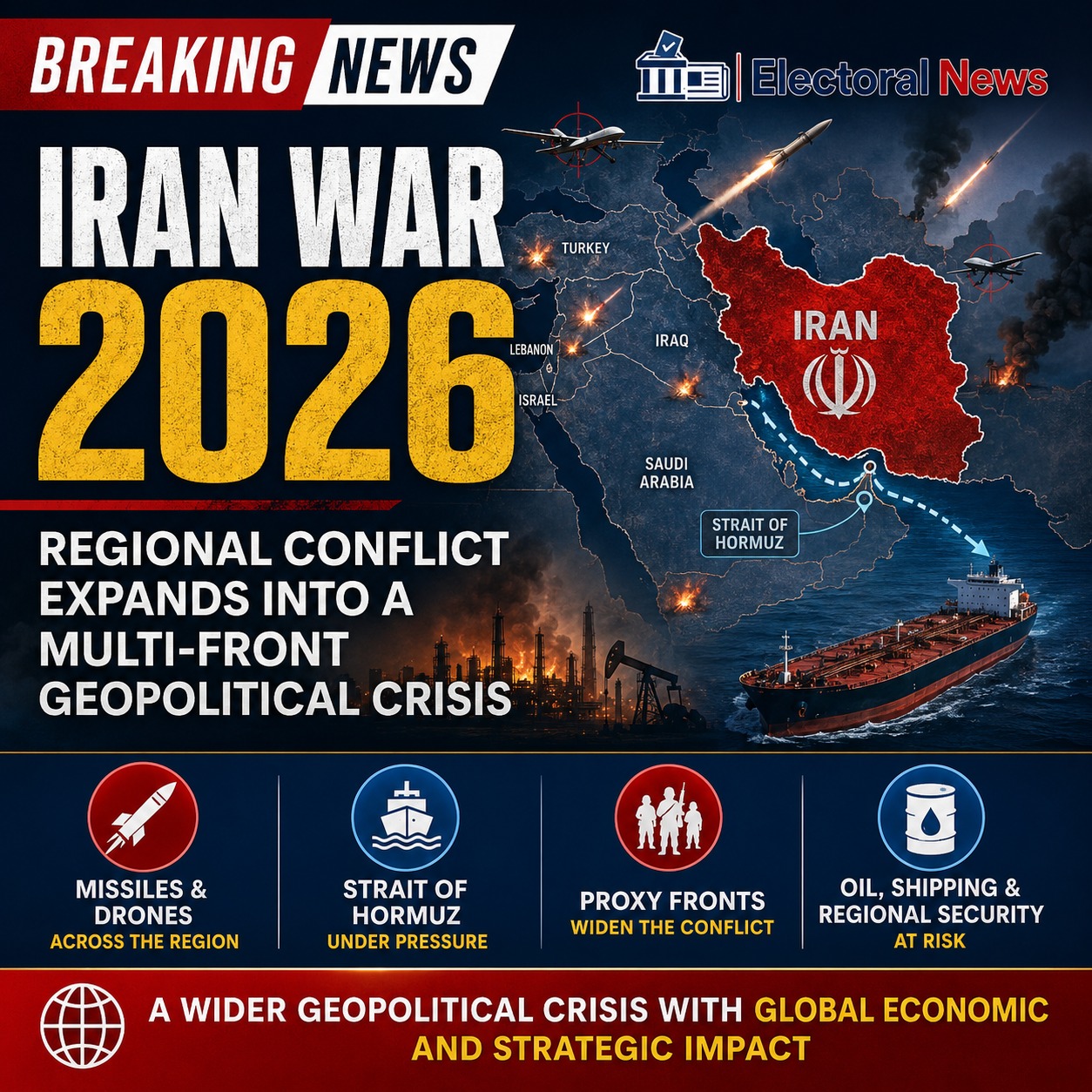
Ongoing Iran war has rapidly evolved into one of the most serious geopolitical crises of 2026. What began with U.S.-Israeli strikes on Iran on February 28 has now expanded into a wider regional confrontation
The ongoing Iran war has rapidly evolved into one of the most serious geopolitical crises of 2026. What began with U.S.-Israeli strikes on Iran on February 28 has now expanded into a wider regional confrontation involving missile attacks, drone strikes, shipping disruptions and rising tensions across the Middle East. Reuters reported that the war began on February 28 and that Iran’s actions effectively closed the Strait of Hormuz, a key global oil route.
Iran’s retaliation has not remained limited to one battlefield. Reports indicate that the conflict has affected Israel, Gulf countries, U.S. military interests, shipping routes and regional security structures. The Strait of Hormuz has become one of the most important fronts because around 20% of the world’s oil passes through the waterway.
The situation has also exposed the limits of traditional military control in the region. The U.S. has moved to reopen shipping routes, while Iran continues to use the Strait of Hormuz as a strategic pressure point. AP reported that U.S. forces fired on Iranian forces and sank six small boats while attempting to reopen the Strait, showing how fragile the situation remains.
This is no longer just a war between Iran, the U.S. and Israel. It is becoming a multi-front conflict involving military, energy, diplomatic and economic pressure. Proxy-linked groups and regional fronts have added more complexity, making the crisis difficult to contain.
The biggest danger now is escalation by miscalculation. Even if major powers do not want a full-scale war, repeated attacks on ships, bases and regional targets can push the conflict into a larger confrontation.