34°c, Sunny

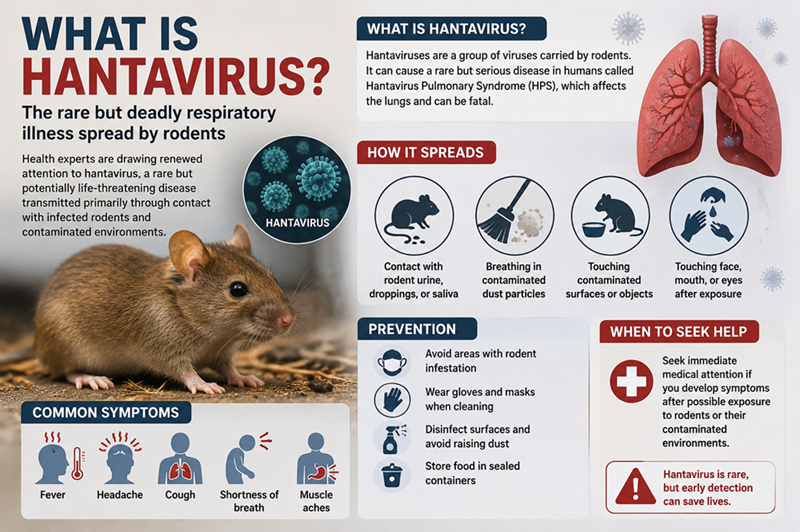
Health experts are drawing renewed attention to hantavirus, a rare but potentially life-threatening disease transmitted primarily through contact with infected rodents and contaminated environments.
Health experts are drawing renewed attention to hantavirus, a rare but potentially life-threatening disease transmitted primarily through contact with infected rodents and contaminated environments.
Although infections remain uncommon in most parts of the world, hantavirus has gained international attention because severe cases can rapidly progress into serious respiratory complications. Public health authorities continue to monitor outbreaks closely, particularly in rural regions and areas with increased rodent activity.
How Hantavirus Spreads
Hantavirus is mainly carried by certain species of rats and mice. Humans can become infected when they inhale virus particles released into the air from rodent urine, droppings, or saliva. The virus may also spread through direct contact with contaminated surfaces or, in rare situations, through rodent bites.
Most infections are associated with:
poorly ventilated storage areas
barns and sheds
campsites and cabins
agricultural zones
warehouses and abandoned buildings.
Health officials note that sweeping or cleaning rodent waste without proper precautions can increase the risk of airborne exposure.
Symptoms and Health Risk
Early symptoms often resemble influenza or common viral illnesses, making detection difficult during the first stages of infection.
Patients may experience:
Fever, fatigue, muscle pain, headaches, dizziness, nausea or vomiting.
As the illness progresses, some individuals can develop severe respiratory distress, low oxygen levels, and fluid buildup in the lungs. In critical cases, hospitalization and intensive medical care may become necessary.Medical experts warn that early diagnosis is important because severe hantavirus infections can worsen rapidly within a short period.Where Hantavirus Is Found.
Different strains of hantavirus exist around the world. Cases have been reported in North America, South America, Europe, and parts of Asia. Certain regions in South America have experienced outbreaks involving the Andes strain, which has drawn particular concern because limited human-to-human transmission has occasionally been observed.Environmental conditions, seasonal changes, and increases in rodent populations can all contribute to higher exposure risks.
Prevention Measures
public health agencies recommend several precautions to reduce infection risk
avoid direct contact with rodents
seal homes and storage spaces against rodent entry
>store food securely
ventilate enclosed areas before cleaning
use gloves and masks when handling contaminated materials
disinfect rodent waste instead of sweeping it dry
Workers in farming, forestry, shipping, and sanitation industries are often advised to follow additional protective measures in high-risk environments.
Ongoing Monitoring
Health authorities worldwide continue to monitor hantavirus activity through disease surveillance programs and outbreak investigations. Experts emphasize that while the disease is rare, awareness and preventive hygiene remain essential in reducing transmission risks.Researchers are also studying environmental and ecological factors that influence rodent-borne diseases as global health agencies strengthen preparedness against emerging infectious threats.
Source: Rodent-Borne Disease