34°c, Sunny

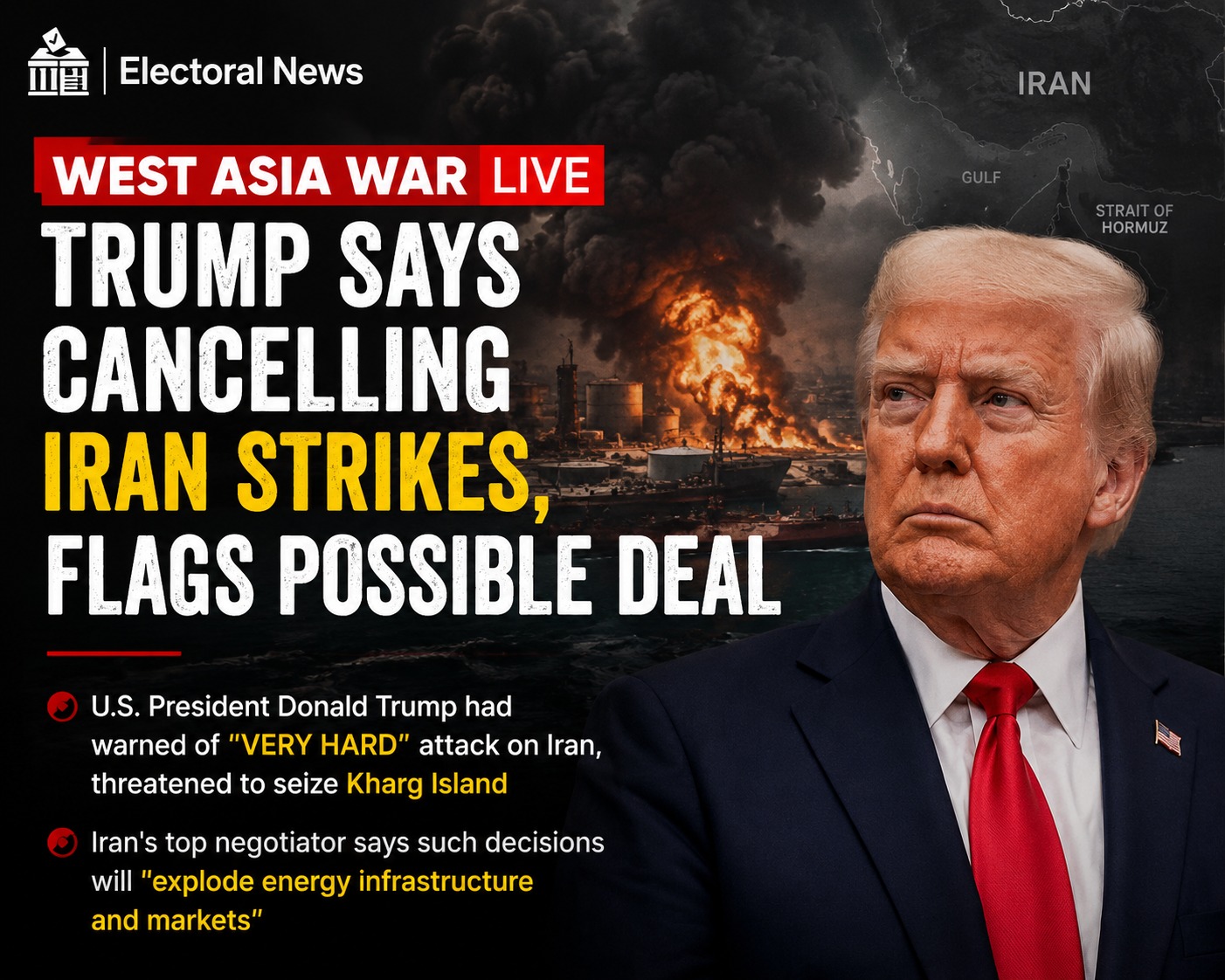
U.S. President Donald Trump has reportedly cancelled scheduled strikes on Iran after earlier warning of a major attack and raising the possibility of targeting Iran’s key oil infrastructure. The move comes as talks continue toward a possible deal, even as tensions remain high across West Asia.
U.S. President Donald Trump has reportedly cancelled scheduled strikes on Iran, marking a major turn in the fast-moving West Asia conflict. The decision came after Trump had earlier warned of a “very hard” attack on Iran and raised the possibility of targeting or taking control of Iran’s key energy infrastructure, including Kharg Island. The development has placed the region at a critical point where military pressure and diplomatic negotiations are moving at the same time. While the cancellation of strikes may reduce the immediate risk of escalation, the crisis is far from over. Kharg Island has emerged as one of the most sensitive points in the conflict. It is one of Iran’s most important oil export hubs and plays a major role in the country’s energy economy. Any military action around the island could have serious consequences for global oil markets, shipping routes and regional stability. Trump’s earlier warning had triggered concern because an attack on Iran’s oil infrastructure could push the conflict beyond direct U.S.–Iran military exchanges and into a wider energy crisis. Iran’s negotiators have warned that such decisions could “explode” energy infrastructure and markets, signalling that Tehran may respond strongly if its oil facilities are targeted.The situation is also linked to the Strait of Hormuz, one of the world’s most important energy routes. Any disruption in the Strait or around Iranian oil export terminals could affect oil and gas supplies across Asia, Europe and the global market. This is why Gulf countries, energy traders and international governments are watching the situation closely. Despite the military threats, reports suggest that talks between the U.S. and Iran are continuing. A possible interim deal is reportedly being discussed, with key issues including sanctions relief, Iranian oil revenues, shipping access, nuclear restrictions and regional security guarantees. The reported cancellation of strikes may indicate that Washington wants to keep diplomatic channels open while maintaining pressure on Tehran. For Trump, the strategy appears to combine strong military threats with negotiations aimed at forcing Iran into a deal.
Iran, however, has warned that it will not accept pressure through military threats. Tehran has repeatedly said that attacks on its territory or energy assets will invite a strong response. This keeps the risk of escalation high, even if one round of strikes has been called off. The latest developments also show how unpredictable the conflict has become. Within hours, the situation moved from threats of a major attack to reports of cancelled strikes and possible negotiations. This uncertainty has created anxiety across global markets and diplomatic circles. For West Asia, the stakes are extremely high. A direct attack on Iranian energy infrastructure could bring Iran, the U.S., Israel, Gulf states and regional armed groups into a wider confrontation. It could also impact oil prices, shipping insurance, inflation and global supply chains. The possible deal being discussed may offer a path to reduce tensions, but reaching an agreement will not be easy. Iran is likely to demand sanctions relief and protection of its oil exports, while the U.S. is expected to push for nuclear restrictions, safe navigation through Gulf waters and limits on Iranian military activity.
The conflict has already become more than a military confrontation. It is now an energy crisis, a diplomatic test and a major geopolitical risk. Every statement from Washington and Tehran is being watched closely because it can immediately affect markets and regional security. For now, the cancellation of scheduled strikes has given diplomacy a narrow opening. But the situation remains fragile, and any new attack, drone strike, missile launch or blockade threat could quickly reverse the momentum. The coming hours will be crucial. If talks progress, the region may move toward a temporary deal or ceasefire arrangement. If negotiations collapse, the threat of strikes on Iran and possible action around Kharg Island could return with even greater force.
Key Highlights
- Trump reportedly cancelled scheduled strikes on Iran.
- He had earlier warned of a “very hard” attack.
- Kharg Island has become a major focus because of its energy importance.
- Iran warned that attacks on energy infrastructure could trigger a wider market crisis.
- Talks for a possible U.S.–Iran deal are reportedly continuing.
- The Strait of Hormuz and global oil supply remain key pressure points.
- The crisis remains fragile despite the temporary pause in strikes.