34°c, Sunny

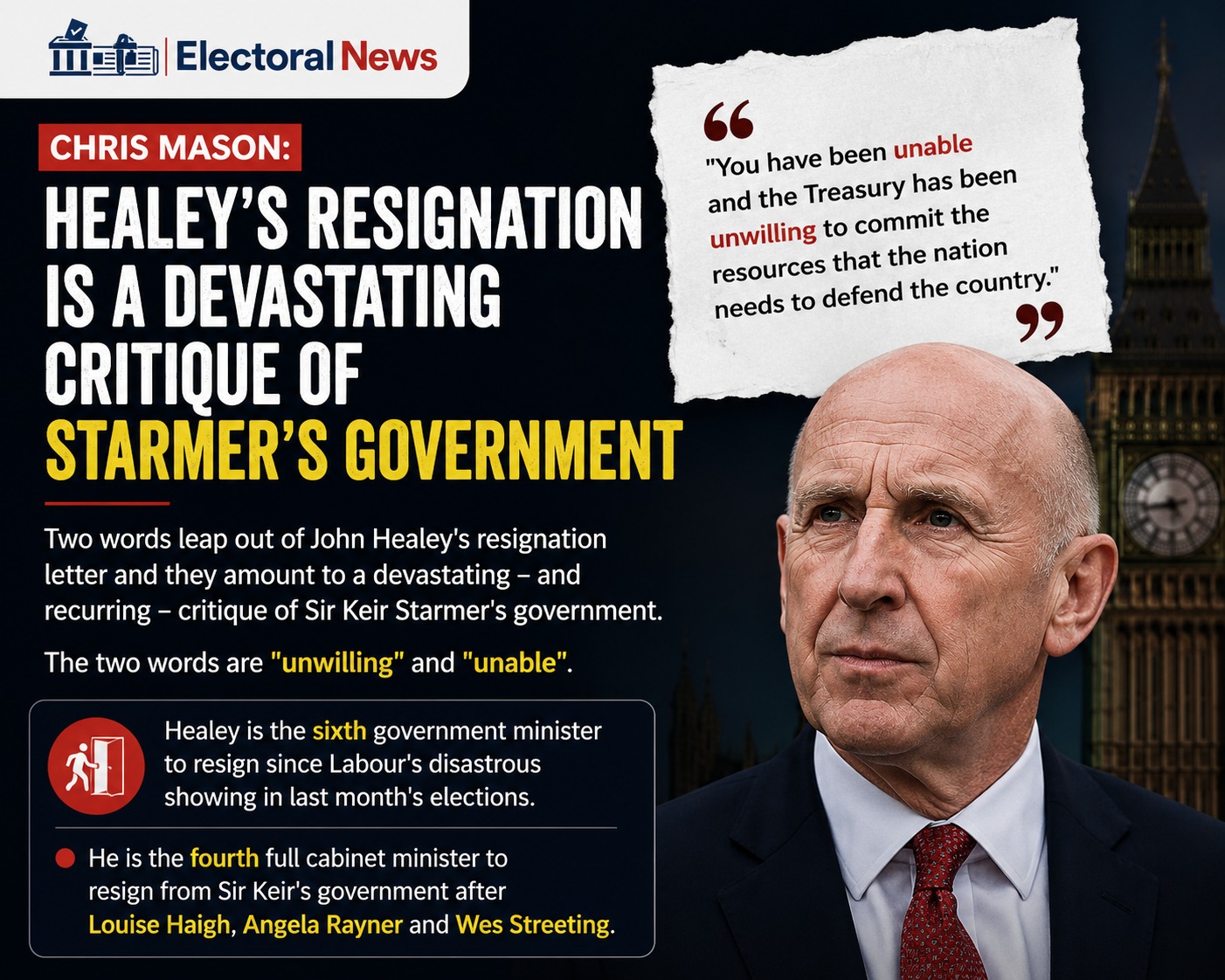
John Healey’s resignation as UK Defence Secretary has triggered a major political crisis for Prime Minister Keir Starmer, with his letter accusing the government of failing to provide the defence resources needed at a time of rising global threats.
UK Defence Secretary John Healey has resigned from Prime Minister Sir Keir Starmer’s government, turning a defence-spending dispute into one of the sharpest internal critiques of the Labour administration so far. The resignation has drawn major attention because of two words in Healey’s letter: “unable” and “unwilling.” Together, they have been interpreted as a direct criticism of both Starmer’s leadership and the Treasury’s approach to defence funding. Healey wrote that the Prime Minister had been unable, and the Treasury had been unwilling, to commit the resources required to defend the country. The line has immediately become the central political message from his resignation. The former Defence Secretary’s exit comes at a sensitive moment for the UK government. Britain is facing rising international security concerns, including the continuing Russia-Ukraine war, growing pressure on NATO countries to raise defence spending, instability in West Asia and broader global military uncertainty. Healey’s position was that the government’s Defence Investment Plan did not go far enough or fast enough. He argued that the country needed stronger and more immediate defence funding to meet the threats Britain now faces.The dispute reportedly centred on the pace and scale of defence spending. Starmer’s government has promised to increase defence spending over time, but Healey believed the plan was too slow and insufficient for the current security environment. His resignation letter also suggested frustration with delays and internal government wrangling. The Defence Investment Plan had already been delayed, and reports indicate that tensions had grown between the Ministry of Defence and the Treasury over how much money should be committed. This makes the resignation more than a personal departure. It has become a public disagreement over national security priorities, government competence and whether the Treasury is blocking the resources defence officials say are necessary. Politically, the timing is damaging for Starmer. Labour has already faced criticism after a poor showing in recent elections, and Healey is the latest senior figure to leave the government. His resignation adds to the impression of instability inside the administration. The letter’s language is especially serious because Healey did not simply say he disagreed with a policy. He suggested the government was failing in its basic duty to defend the country. For any prime minister, that is one of the most damaging criticisms possible.
The resignation also raises questions about Starmer’s authority over his own cabinet. If a senior cabinet minister believes the Treasury is unwilling to provide necessary funding and the Prime Minister is unable to force the issue, it suggests deeper problems in government decision-making. Opposition parties are expected to use the resignation as evidence that Starmer’s government is divided and weak on defence. Defence analysts and military voices are also likely to debate whether the UK’s current spending path is realistic given global threats. Healey’s departure may also create uncertainty ahead of major defence and NATO discussions. Britain’s allies will be watching closely to see whether the government can maintain a clear defence strategy after losing the minister responsible for delivering it. The resignation could force Starmer to make two urgent decisions: who replaces Healey, and whether the Defence Investment Plan needs to be revised to restore confidence. If the government stands by its current plan, it may face more criticism from defence experts and political opponents. If it increases funding, Healey’s resignation may be seen as having forced a major policy correction. For Labour, the political danger is that this resignation may become part of a larger narrative: a government struggling with authority, spending choices and public confidence after electoral setbacks. The issue also touches a wider debate in Britain about priorities. Defence, health, welfare, infrastructure and public services are all competing for limited funds. Healey’s resignation shows that these choices are no longer only technical budget questions — they are now central political battles inside the government.
At the heart of the crisis is a simple but powerful argument: does Britain have the resources and political will to defend itself in a more dangerous world?
Healey has answered that question by resigning. Now Starmer must answer it by governing.
Key Highlights
- John Healey resigned as UK Defence Secretary.
- His resignation letter criticised Starmer and the Treasury over defence funding.
- The words “unable” and “unwilling” have become central to the political row.
- Healey argued the government had not committed enough resources to national defence.
- The resignation deepens pressure on Starmer after Labour’s poor election performance.
- The issue raises major questions about UK defence readiness, Treasury control and Starmer’s leadership.