34°c, Sunny

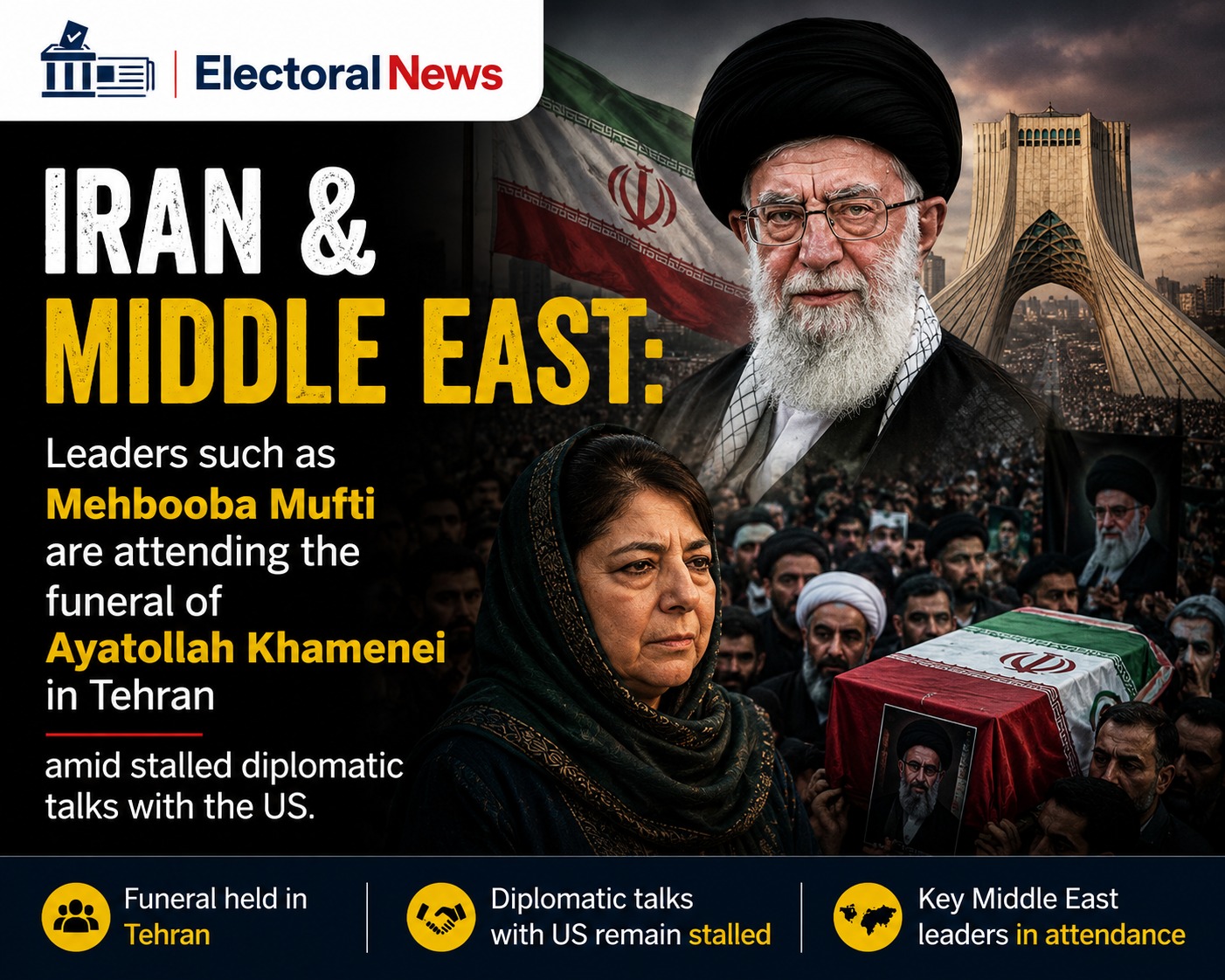
Iran is holding major funeral ceremonies for late Supreme Leader Ayatollah Ali Khamenei in Tehran, with political leaders and foreign guests in attendance. The ceremonies come at a sensitive moment as U.S.–Iran diplomatic talks remain paused and regional tensions continue across West Asia.
Iran is witnessing major funeral ceremonies for late Supreme Leader **Ayatollah Ali Khamenei** in Tehran, drawing large crowds, senior Iranian officials, religious leaders and foreign attendees at a time of intense geopolitical tension in West Asia. The funeral ceremonies have become more than a national mourning event. They are being seen as a major political and diplomatic moment for Iran, coming during a fragile period marked by regional conflict, strained ties with the United States and ongoing uncertainty over future negotiations. Thousands of mourners gathered in Tehran to pay final respects to Khamenei, whose death has created a major political moment for the Islamic Republic. The ceremonies are expected to continue through multiple locations before final burial arrangements are completed. Among the political figures attending the funeral is Mehbooba Mufti, former Jammu and Kashmir Chief Minister and PDP president. Her presence has drawn attention in India and abroad, as Iran’s invitation to political figures from different countries underlines the international significance of the funeral.
The event also comes as U.S.–Iran diplomatic talks remain paused. Reports indicate that negotiations have been delayed during the funeral period, adding another layer of uncertainty to an already tense regional situation. The pause in talks is important because Washington and Tehran had been engaged in efforts to reduce tensions after months of conflict and diplomatic breakdown. However, the funeral period has temporarily shifted Iran’s political focus toward mourning, state ceremony and internal consolidation.
For Iran, the funeral is also a show of unity and resilience. Large public gatherings, official participation and symbolic displays are being used to present the image of a state standing firm despite military pressure, economic hardship and diplomatic isolation. The presence of foreign guests gives the ceremony a wider diplomatic meaning. It shows that Iran is still seeking political legitimacy and international engagement, especially from countries and figures with historical, religious or strategic connections to Tehran. From India’s perspective, Mehbooba Mufti’s attendance has attracted attention because Iran holds religious, cultural and geopolitical importance for many communities in the region. India and Iran also share a long history of civilisational contact, energy ties and strategic engagement, although New Delhi has to balance its Iran policy with relations with the United States, Israel and Gulf countries. The funeral also takes place against the backdrop of broader West Asian instability. Tensions involving Iran, the United States, Israel and Gulf states have affected oil markets, shipping routes and regional security calculations. Any delay or collapse in diplomatic talks could increase uncertainty across the region. One of the key concerns is whether Iran’s leadership transition and public mourning period will harden Tehran’s position in future talks. Public anger, emotional funeral gatherings and anti-U.S. sentiment may make compromise more politically difficult in the short term.
At the same time, the pause in talks does not necessarily mean diplomacy has ended. It may simply reflect the timing of the funeral ceremonies and the need for Iran’s leadership to manage internal political and religious expectations before returning to negotiations. For the United States, the challenge will be to keep diplomatic channels open while avoiding steps that could escalate tensions. For Iran, the challenge will be to balance domestic pressure for a strong response with the practical need to stabilise its economy and regional position. The funeral has therefore become a turning point in the current West Asia crisis. It is not only a farewell to a powerful religious and political figure, but also a moment that may shape Iran’s next diplomatic direction. International observers will now be watching three things closely: the scale of foreign participation, Iran’s political messaging during the funeral, and whether U.S.–Iran talks resume after the mourning period. If negotiations restart, the funeral may be remembered as a temporary pause in diplomacy. If talks remain stalled, it could mark the beginning of a more uncertain and confrontational phase in the region. For now, Tehran remains the centre of global attention as Iran mourns Khamenei while the world waits to see what comes next in West Asia.
Key Highlights
- Iran is holding major funeral ceremonies for Ayatollah Ali Khamenei in Tehran.
- Large crowds and senior Iranian officials are attending the ceremonies.
- Mehbooba Mufti is among the political figures present.
- U.S.–Iran talks remain paused during the funeral period.
- The event comes amid wider West Asian tensions.
- The funeral may influence Iran’s political messaging and future diplomatic posture.
- Global observers are watching whether U.S.–Iran negotiations resume after the mourning period.